


By Dana Fulwiler Volk, CEO, IPEN
I’ve had the joy of connecting with more of you this June and July, virtually and in person. Thank you for being a part of IPEN’s growing global community! If you haven’t already, please join our email list here.
Leadership and love have been two themes of these summer connections. In this blog I spotlight three specific events that were filled with old and new friends of IPEN’s, educators, leaders, and researchers all showing up to elevate the science of wellbeing and human flourishing from different angles. I hope these insights will support your day-to-day work in positive education.
In case you missed it – check out this blog reflection on IPEN’s first virtual Global Voices Forum – and register now for the next one in August! We can’t wait to meet you.
Leadership for Flourishing Roundtable at the University of Oxford
“Love is already in the room. The question is, what are we doing with it?”
– James L. Ritchie-Dunham, Leadership for Flourishing Roundtable, June 2026
The Leadership for Flourishing Roundtable at Worcester College, University of Oxford, gathered people from the Leadership for Flourishing group, hosted by the Flourishing Network at The Human Flourishing Program at Harvard University; the Wellington Leadership & Coaching Institute at The Bridge; Wellington College; and many partners including Global Social Leaders and IPEN ourselves.
The theme this year was leadership in education as a catalyst for ecosystem-wide flourishing, and the role of love in leadership. Love. In. Leadership. We discussed how ‘radical’ that pairing still seems to be – and yet how essential.
This is the first education or leadership conference I’ve ever been a part of where love was a central theme, without apology or justification. It was refreshing, and I took it as an invitation to use that word a lot more often in our work in education!
The conference principles were lived in real-time. I’m sharing them below as inspiration for our global community at IPEN, as I see alignment with our collective work in positive education:
- The purpose of leadership is ecosystem-wide flourishing
- Love is key in both leadership and flourishing for individuals, organizations and societies globally
- Character is foundational to leadership for flourishing
- Anyone can lead because anyone can improve the flourishing of people and the planet.
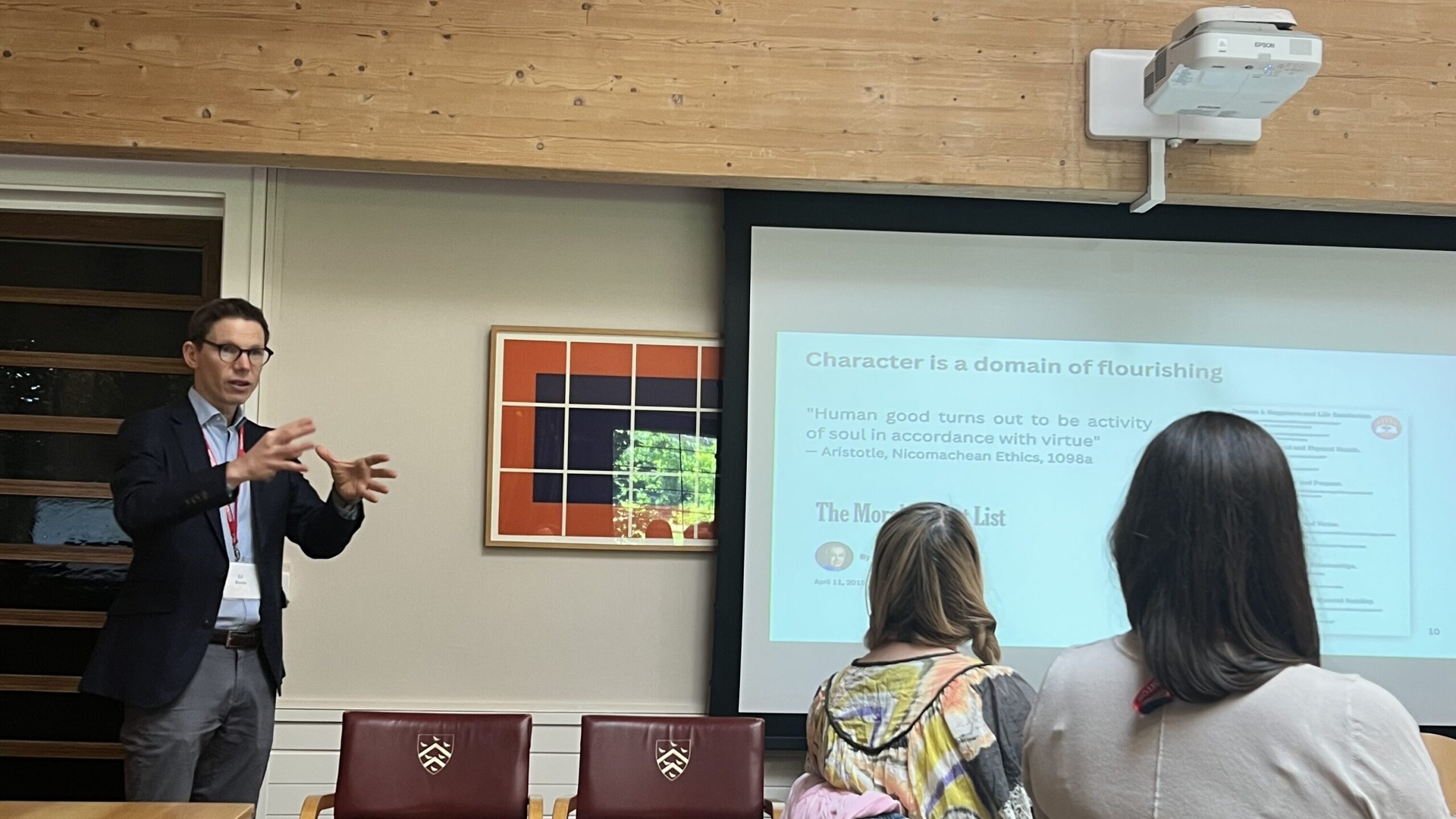
Professor Edward Brooks, Executive Director of The Oxford Character Project opened the event sharing new insights and research on character and leadership. As the Oxford Character Project puts it, character is “the guiding core of who we are – a mosaic of personal dispositions or habits that are developed over time and shape how we perceive, think, feel, and act.” Character is both a domain of flourishing in its own right, on par with things like health or close relationships – and character is a driver of flourishing – it helps move the other domains forward, shaping whether a person’s relationships, health, and sense of meaning develop well over time.
During the Q&A, Professor Brooks suggested helping our students inspect their definition of success – a valuable exercise for us all. Where does that definition come from, and is it truly ours? Is it aligned with our values, and are our character strengths alive in the way we pursue it?
He closed on the importance of friendships. Aristotle’s virtue friendships specifically, the ones whose whole purpose is helping each other become better. His challenge: map your virtue friendships, then spend more time in that kind of company.
This aligns with how The Oxford Character Project describes character forming in practice – through repeated practice, emulating people we admire, reflecting on experience, and growing alongside difficulty. If you’re curious to go deeper, their site has more on how character is built and why it matters, including a helpful framework of seven strategies for character development.
- Invitation: Name the two or three people in your life who make you better simply by being around them – the ones Aristotle would call virtue friends. Find twenty more minutes in your week to connect with at least one of them. Consider cold-calling them right now!
- The Science: Aristotle’s instinct has held up well under modern research – the Harvard Study of Adult Development, the longest-running study of its kind, found that the strength of our close relationships is the single strongest predictor of long-term happiness and health, more than wealth or fame.
- Considerations: This can offer us a boost whether the call is five minutes or fifty – the point is reaching out and connecting with a virtue friend, regardless of the length or method. If a call feels like too much right now, consider a voice memo or even a text. Enjoy the energy boost!
Thank you to hosts Emmie Bidston and Dr. Katy Granville-Chapman, and to our newly expanded community of IPEN friends and collaborators.
Learn more about The Oxford Character Project
Check out the Leadership for Flourishing Book
Learn more about the Human Flourishing Program at Harvard University
Festival of Education at Wellington College

“Love is not something we just talk about – it’s something we do … You are the change. We are the change.”
– Sir Anthony Seldon, Festival of Education, July 2026
Wellington College hosted their 16th annual Festival of Education – 500+ speakers, 6,000+ attendees, and over 80% from state-funded schools and colleges. Hosting an event at that scale is its own kind of generosity to the field, and I was grateful to experience it.
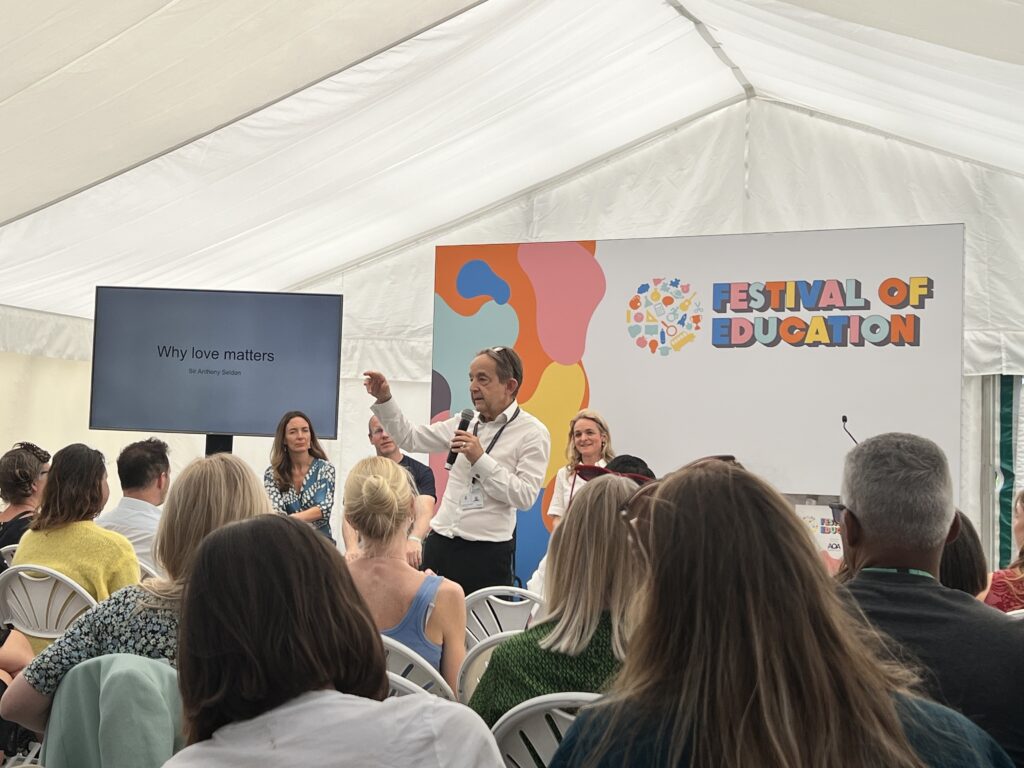
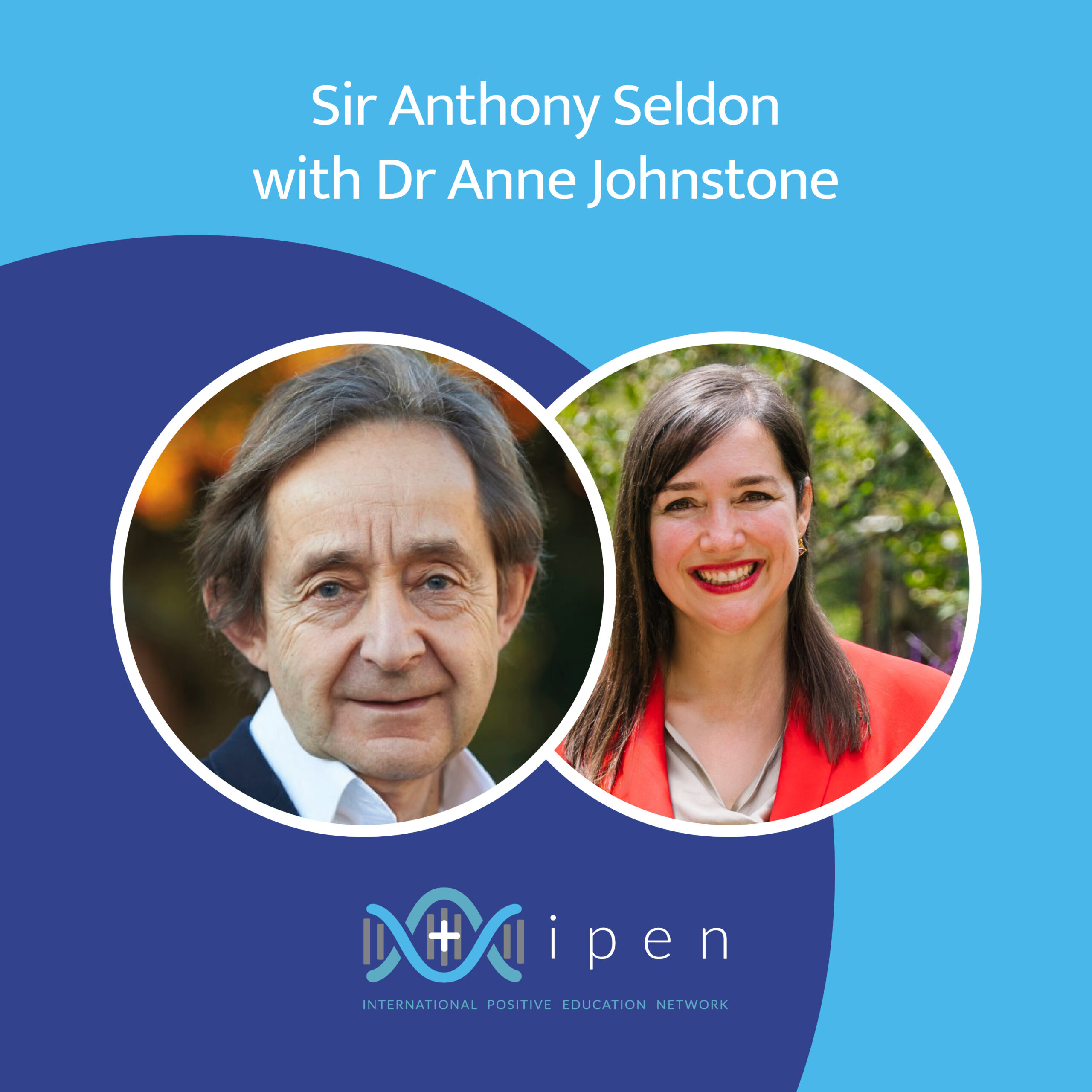
“Why love matters” displayed with simple power as Sir Anthony Seldon, IPEN’s co-founder, took the mic at one of several sessions he co-facilitated. His case: love, creativity, and curiosity already live in every person in the room, and the work is doing something with them. He drew on Ubuntu – I am because we are – and told the room they were revolutionaries, because trust, love, and comradeship at work is a genuinely bold thing to practice right now. “We can be the change. And we cannot wait for others, we need to be it now.”
Jonathan Harper of Global Social Leaders followed with inspiring stories of youth-led action. Every young person can lead. A student in Turkey partnered with her mayor to open a library. Svitlo School in Ukraine (Svitlo means “light”) turned old British-style phone boxes into free public libraries through its “Svitlo Reads” campaign.
On Day 2, Michael Stevenson shared the policy work to carry this forward through the OECD Education for Human Flourishing framework. Far from aspirational, this pathway to transform education from a human capital to a human flourishing model is real, and generating energy around the world. Positive education brings decades of research and experience to this work, as many of you across IPEN’s global community have been exploring how best to create sustainable cultures of wellbeing in school communities for years. You may find this framework validating or energizing, especially in the age of AI.
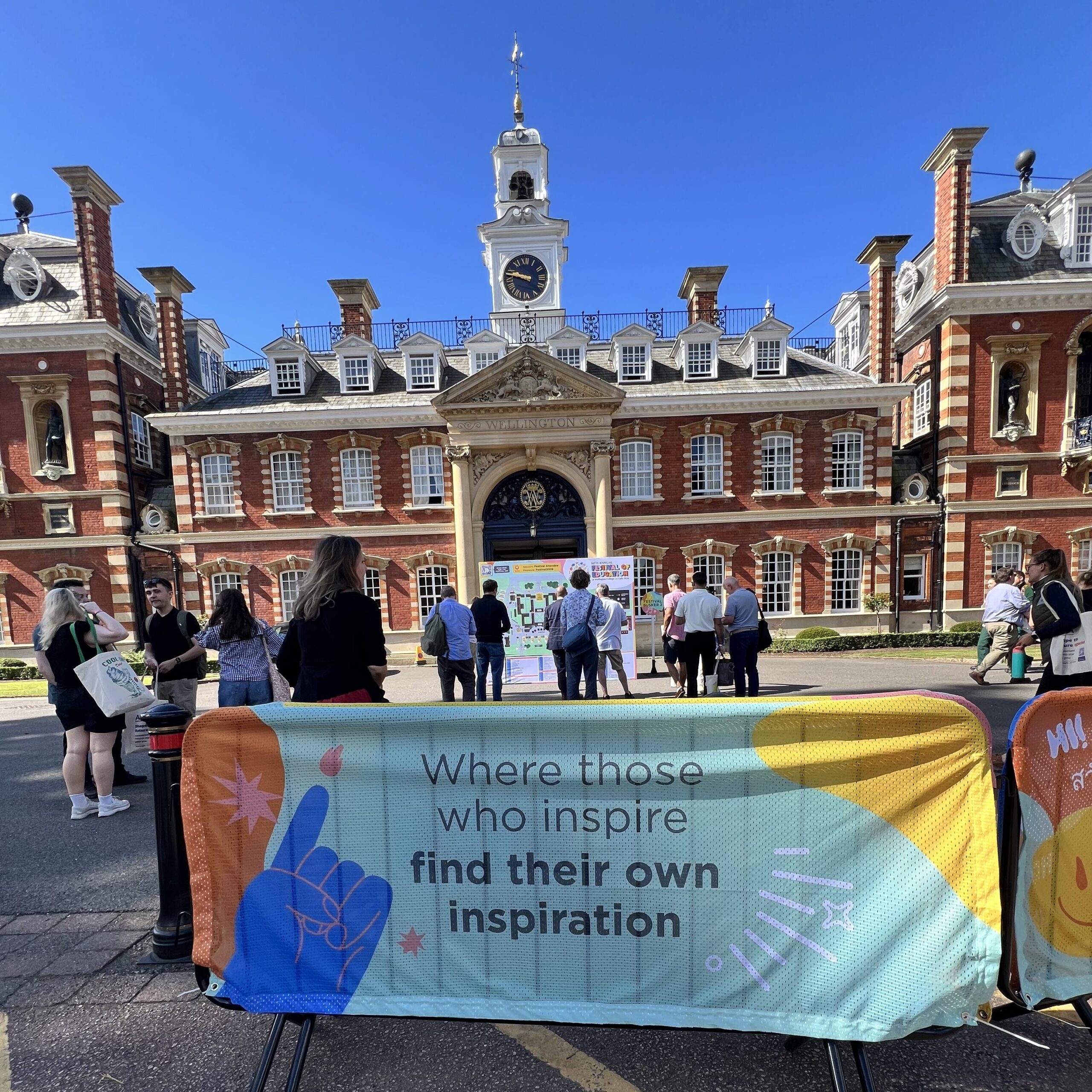
As an educator, I’ve attended countless conferences and professional learning events over 20 years in the profession – but nothing like this. Food trucks, music, interactive stations for each subject area, and themed session tracks covering a range of topics educators and leaders care deeply about. We were even greeted by talented students playing bagpipes on Day 2. All of this grounded in rich learning and connection enabled by a thoughtfully designed experience. Professional development in education can (and should?) be fun!
- Invitation: Returning to Sir Anthony Seldon’s message that love, creativity, and curiosity are already in the room – the work is doing something with them. Pick one of those three character strengths (love, creativity, or curiosity) to use in a new way today.
- The Science: Decades of research show that using your character strengths in new ways lifts happiness and eases depressive symptoms, effects that last well beyond the exercise itself. Curious to learn more? You can explore a rich body of research on character strengths – including love, creativity, and curiosity – on the VIA Institute on Character’s research page. For more on character and leadership, visit The Oxford Character Project’s research page.
- Considerations: Choose whichever of the three strengths feels most energizing for you right now and keep it simple – a different kind of question in a meeting, a new way of noticing a colleague or friend, or a fresh use of your own creativity in a routine task. Experiment with being the change you’d most like to see through the practice of love, creativity, and curiosity.
European Conference on Positive Psychology in Dublin, Ireland
The European Conference on Positive Psychology, hosted this year by RCSI’s Centre for Positive Health Sciences, gathered the research side of this community dedicated to the science of wellbeing and human flourishing, in education and beyond. Below is one of many highlights specific to our work in positive education.
PERMA-Lead:
What does positive leadership look like in practice in school communities, and what impact does it have on educators? Dr. Thomas Goetz and colleagues at the University of Vienna surveyed 446 teachers across Austria, Germany, and Switzerland, using a PERMA-Lead model, which identifies five concrete behaviours of positive leadership: helping people feel good at work, providing tasks that engage and match their strengths, building relationships where colleagues support each other, helping people see the meaning in their work, and noticing and naming their accomplishments.
Their published study, Teachers emotionally profit from positive school leadership: Applying the PERMA-Lead model to the control-value theory of emotions, suggests that teachers whose leaders practiced more of these PERMA-Lead behaviours reported better emotional experiences at work – more enjoyment and pride, and less anger, anxiety, and boredom. When the researchers explored why, they found two pathways at work: teachers’ sense of control over their job, and their sense that the work mattered. Both played a role, but the “mattering” pathway was considerably stronger. Feeling in control helped a little; feeling valued made the bigger difference. And leaders who made teachers’ work feel meaningful through the small, visible acts of naming its purpose and its impact were the ones moving that needle.
Important note: this was a survey at a single point in time, so it can’t tell us that positive leadership causes better emotions – only that the two go together. The researchers are careful about that limitation. But it’s still a striking pattern with practical implications.
- Invitation: Name one specific thing a colleague, friend, or family member did this week that you really appreciated – tell them why it mattered.
- The Science: As the late Dr. Isaac Prilleltensky studied, mattering – the experience of adding value and feeling valued – is a deeply held psychological need that has significant impacts on our wellbeing. We can all help spread mattering in our workplaces and everyday lives. If you haven’t already, consider exploring Mattering In Action which includes free mattering resources for educators – and Jennifer Breheny Wallace’s new book on Mattering.
- Considerations: Like the previous practice – keep it simple. At its core, mattering is about helping people feel seen. In our own contexts we can ask ourselves: in what ways do the people around me have opportunities to add value and feel valued? How could I create more of those opportunities? Dr. Prilleltensky shared a concept that’s stayed with me since he guest-lectured in my MAPP program: self-mattering. How are you recognizing the unique value only you can add to the people and the world around you? Tying this back to our theme – self-love and self-leadership are powerful resources for us in education – and ripple back out into the collective.
🗓️ IPPA World Congress Announced for 2027: Click here to read IPPA’s Save the Date and learn more. IPEN will be there – we hope you will be, too!
Living It, Together
Love and leadership showed up in every one of these rooms. From research, policy, and grassroots on-the-ground inspiration led by classroom teachers and school leaders – there are many of us around the world working on positive education from different perspectives.
This is a rich global ecosystem – one that IPEN is excited to help connect in meaningful and impactful ways. If you’re doing this work and feeling isolated in it – we’ve got you.
🗓️ Join IPEN’s Next Virtual Gathering in August
Please register below to join our next live call as a global community:
- Option 1: Tuesday, August 18 at 12:00pm EDT / 4:00pm UTC / 5:00pm BST
- Option 2: Tuesday, August 18 at 6:00pm EDT / 10:00pm UTC / Wednesday, August 19 at 8:00am AEST
In case you missed it, read this summary of our last call with reflections from attendees.
We hope to meet you there! In the meantime, have a wonderful month. Thank you for all that you do to enable wellbeing and human flourishing in the world.
📝 Reminder: Please complete the IPEN Community Profile Form



Comments +